
Italian restaurant near Exmouth Market, Clerkenwell
Exmouth Market is one of Clerkenwell's best-loved streets, lined with cafes, restaurants and independent shops. It also has a surprising Italian connection. ...
Read the story
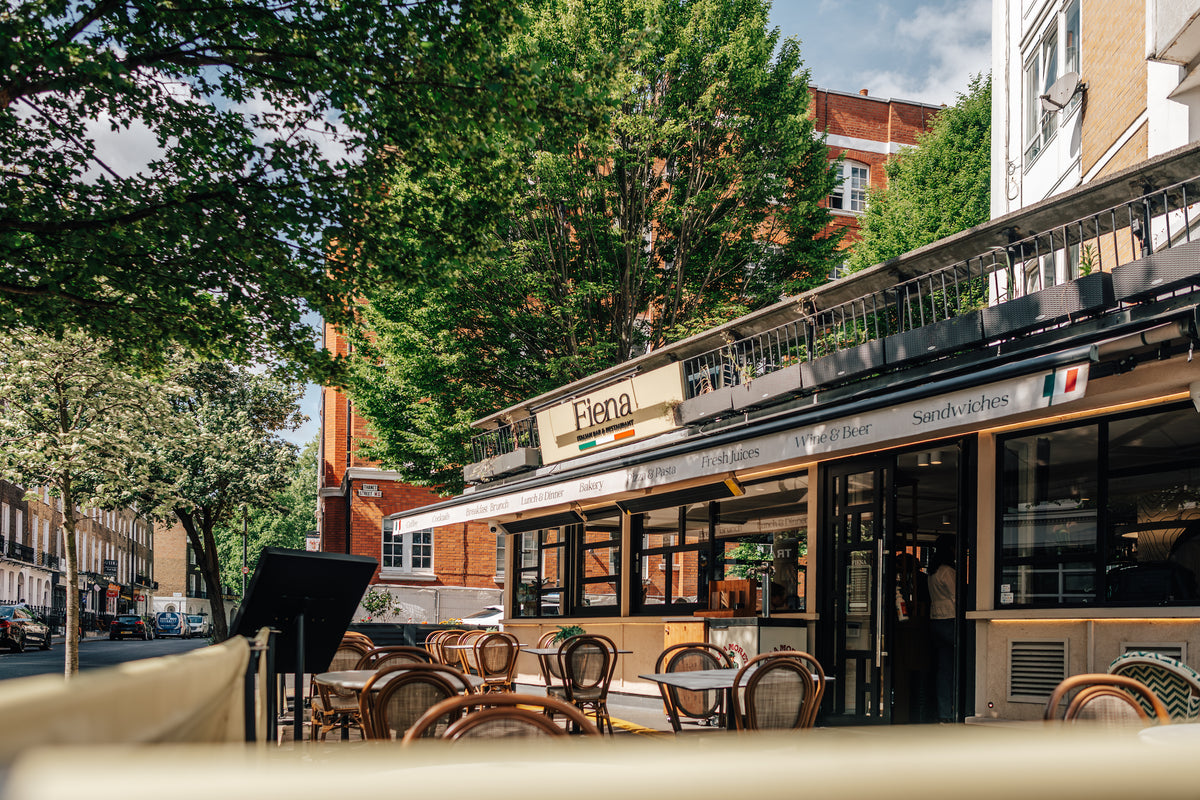
Ask Italians on holiday by the sea what they're having for lunch, and many will say pasta with seafood. It's also one of the dishes our guests rave about at Fiena, our family-run Italian cafe, bar and restaurant at 4 Medway Court, Judd Street, London WC1H 9QX, a few minutes' walk from King's Cross St Pancras. Here's what frutti di mare means, how the dish is made in Italy, and how we make ours.
Frutti di mare is Italian for seafood, literally "fruits of the sea": the plural of frutto di mare. In a pasta dish, it usually means molluscs and crustaceans: think mussels, clams, squid and prawns.
The dish has another name in Italy: allo scoglio, from scoglio, a rock or reef. According to Italian Wikipedia's page on spaghetti allo scoglio, spaghetti allo scoglio, or spaghetti ai frutti di mare, took shape in the 1980s and is still hugely popular across Italy, especially at restaurants in seaside towns. Today Italian restaurants use "allo scoglio" for any pasta or soup made with molluscs and crustaceans.
The pasta is boiled first, then tossed in a pan with molluscs (such as mussels, clams and squid) and crustaceans (such as scampi or prawns), with parsley, garlic and chilli, and a splash of white wine. Some cooks finish the pasta in fish stock so it soaks up more flavour, and some add cherry tomatoes. Spaghetti is the classic shape, but the same dish is made with other long pastas, including tagliolini, vermicelli and linguine.
Linguine means "little tongues". It comes from Genoa, and it's a long pasta with an elliptical rather than round cross-section, about 4 millimetres wide: wider than spaghetti, but narrower than fettuccine. That flatter shape gives sauces more surface to cling to, which is why linguine is so often paired with seafood; it's said to be the preferred pasta for seafood among Neapolitans. Background from Wikipedia's linguine page.
On our main menu, the Linguine frutti di mare is linguine with chilli, garlic, tomato sauce, bisque and a mix of seafood. The bisque is what makes it ours: bisque is a smooth, creamy, highly seasoned French soup classically made from a broth of crustaceans such as lobster, langoustine, crab or prawns (background from Wikipedia's bisque page). Together with the tomato sauce, it adds a deeper seafood flavour.
If you love seafood pasta, compare it with our Linguine vongole, with baby prawns, garlic, cherry tomatoes, bisque and clams, and the Risotto asparagus & prawns. See our posts on linguine alle vongole, risotto and seafood and fritto misto. Need to avoid gluten? Gluten-free penne is available for all of our pasta dishes; see gluten-free pasta and pizza.
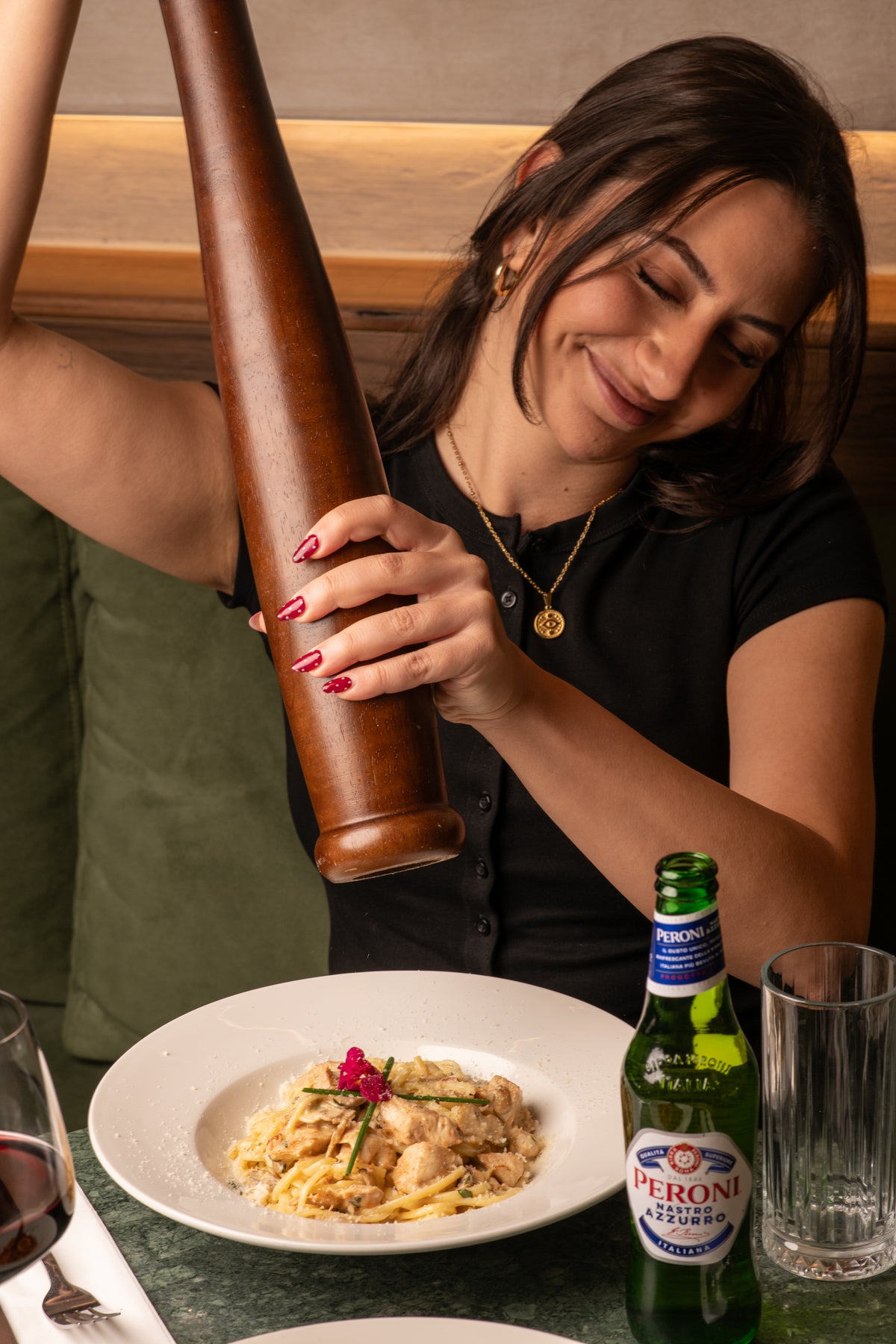
Our seafood pasta comes up again and again in reviews. Yasmeen would recommend our seafood pasta as one of the best pasta dishes ive ever had
(Yasmeen, Google review), and on a walk-in dinner for four, M wrote: I had the seafood linguine, everything was delicious.
(Google review) My pasta was great the fish was cooked perfectly.
(Google review)
Start with the Bruschetta, the Mussels with capers, anchovies and olives, or the Marinated seafood in olive oil, lemon juice and herbs. See our post on our mussels. To drink, a crisp white works best with chilli and tomato: the Pinot Grigio, the Vitis Nostra Grillo or the Gavi di Gavi from our drinks list, or a glass of prosecco; see our prosecco post.
“The pasta was perfectly al dente”
Ayub, Google review, 2025
The seaside, a few minutes from King's Cross. Book a table or just walk in.
Exmouth Market is one of Clerkenwell's best-loved streets, lined with cafes, restaurants and independent shops. It also has a surprising Italian connection. ...
Read the storyFew drinks are as tied up with London's history as gin. It was blamed for a public health crisis in the 18th century, gave its name to a whole style of spiri...
Read the storyAsk for an Italian white and most people think of Pinot Grigio. But Italy has hundreds of local grapes, and some of the most interesting come from Sicily. On...
Read the story
