
Italian restaurant near Exmouth Market, Clerkenwell
Exmouth Market is one of Clerkenwell's best-loved streets, lined with cafes, restaurants and independent shops. It also has a surprising Italian connection. ...
Read the story
If you know Pinot Noir from Burgundy or New Zealand, you already know Pinot Nero: it's the same grape, under its Italian name. A bottle from Italy sits on the red list at Fiena, our family-run Italian cafe, bar and restaurant at 4 Medway Court, Judd Street, London WC1H 9QX, a few minutes' walk from King's Cross St Pancras. Here's the story of one of the world's most famous, and most difficult, grapes, and what to eat with a glass.
Pinot Noir is a red grape whose name comes from the French words for pine and black. The "pine" is thought to refer to its small, tightly packed bunches, which are shaped like a pine cone. In Italy it's called Pinot nero, in Germany Spätburgunder ("late Burgundian"), and in Austria and parts of Switzerland Blauburgunder, "blue Burgundy".
It's almost certainly a very ancient variety, possibly only one or two generations removed from wild vines. Its spiritual home is Burgundy, in eastern France, where it has been grown since around 100 AD and where the Côte d'Or alone has about 4,500 hectares of it. It's also one of the main grapes in Champagne, and in Italy it goes into the sparkling wines of Franciacorta. Background from Wikipedia's Pinot Noir page.
Winemakers love it and complain about it in equal measure. Pinot is sensitive to wind and frost, has to be kept to low yields for quality wine, and its thin skins make it prone to rot. The wine writer Jancis Robinson called it a "minx of a vine", and the winemaker André Tchelistcheff put it more bluntly: "God made Cabernet Sauvignon whereas the devil made Pinot Noir". It's also famously good at showing where it was grown, so wines from different regions can taste very different.
In Italy, Pinot nero has traditionally been grown in the cooler north: South Tyrol (Alto Adige), Trentino, Friuli and the Collio Goriziano, the Veneto, Franciacorta and Oltrepò Pavese in Lombardy. It's also planted in Tuscany. In South Tyrol the grape is first recorded in 1838, on a grape-buying list under the name "Bourgoigne noir", and was later called Blauburgunder, as it is in Austria.
Because of those thin skins, Pinot usually makes lighter-coloured, medium-bodied red wines with soft tannins. Young Pinot tends to smell of red fruit such as cherries, raspberries and strawberries; with age it can take on earthier, more savoury notes. It's the opposite of a big, heavy red, which is exactly why so many people reach for it with food.

On our drinks menu, the Pinot Nero is from Italy and described as having fragrant red berries (strawberries, raspberries, bramble and red cherries) with a herbaceous lift of sage and rosemary. It sits on our red list between lighter everyday reds like the Cara Amica Sangiovese and bigger bottles such as the Barolo and the Fidora Amarone. For the full list, see our guide to our Italian wine list, and ask our team about bottles when you order.
A lighter red with soft tannins and fresh acidity is one of the most food-friendly wines there is, and it's one of the few reds that works with fish. From our main menu:
See our posts on chicken dishes at Fiena, saltimbocca, the Margherita and funghi al forno, which keeps the mushroom theme going as a starter.
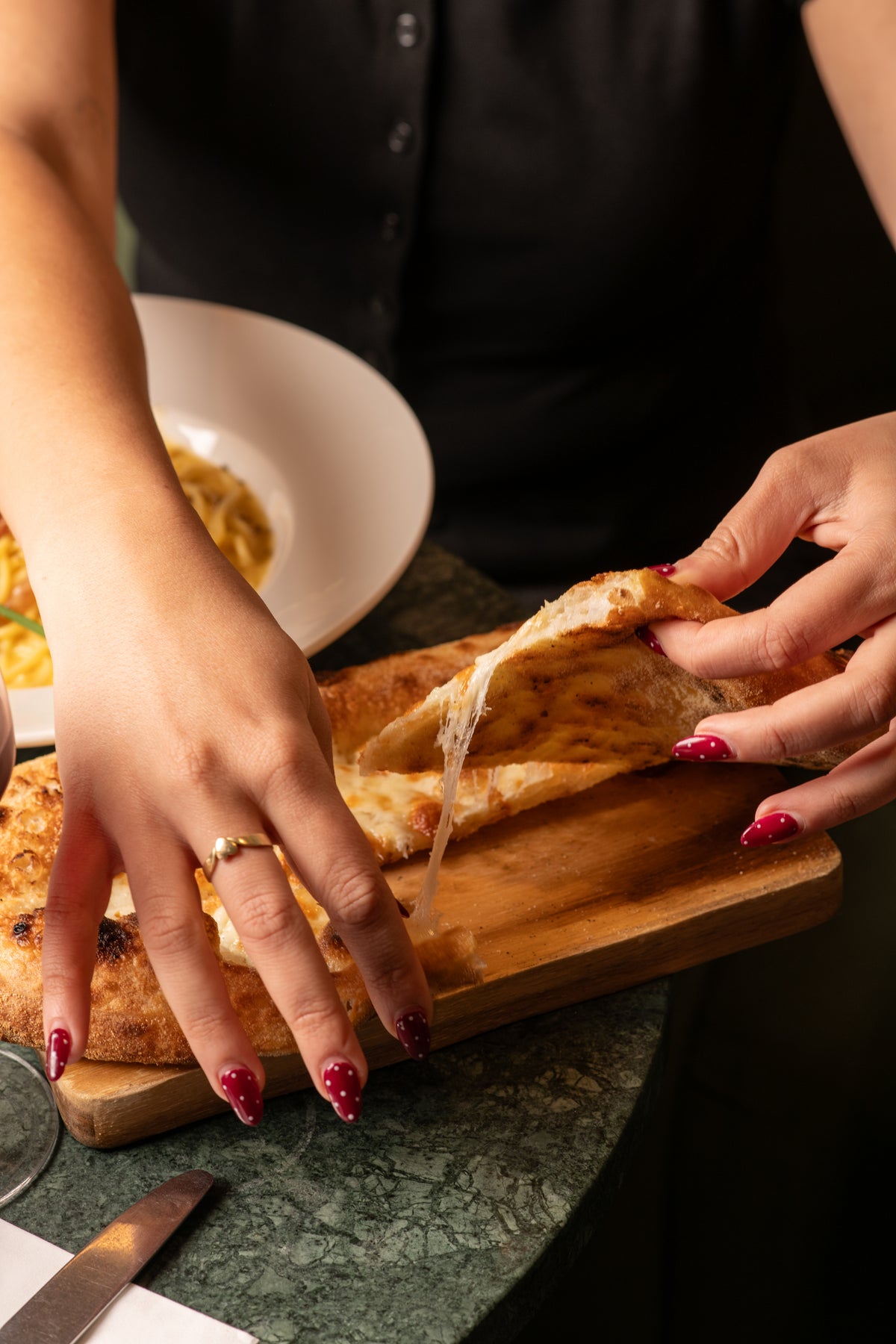
Guests often mention the wine and the warmth of the room. Normof wrote: Wine was good, too.
(Normof, Google review) Nasipa found that The menu has a nice variety, and every dish we tried was enjoyable.
(Nasipa, Google review) And James, who used to run a pub, praised the Friendly welcoming staff, delicious food, and excellent fresh beer.
(James, Google review), in case Pinot isn't your thing.
“The atmosphere is cozy and well-designed, making it a great spot for a relaxed meal.”
Nasipa, Google review, 2025
The devil's grape, on Judd Street. Book a table or just walk in. Please drink responsibly.
Exmouth Market is one of Clerkenwell's best-loved streets, lined with cafes, restaurants and independent shops. It also has a surprising Italian connection. ...
Read the storyFew drinks are as tied up with London's history as gin. It was blamed for a public health crisis in the 18th century, gave its name to a whole style of spiri...
Read the storyAsk for an Italian white and most people think of Pinot Grigio. But Italy has hundreds of local grapes, and some of the most interesting come from Sicily. On...
Read the story
