
Italian restaurant near Red Lion Square and Conway Hall, Holborn
Red Lion Square is a small, leafy square just off Holborn, best known today as the home of Conway Hall. If you're there for a talk, a concert or a meeting an...
Read the story
If you've ever ordered a Chianti, you've already met Sangiovese. It's the grape at the heart of Tuscany's best-known reds, and it's on the red list at Fiena, our family-run Italian cafe, bar and restaurant at 4 Medway Court, Judd Street, London WC1H 9QX, a few minutes' walk from King's Cross St Pancras. Here's where it comes from, and what to eat with a glass.
The name is usually traced to the Latin sanguis Jovis, "blood of Jupiter", the king of the Roman gods. According to legend, it was coined by monks from Santarcangelo di Romagna, near Rimini. Early theories even suggested the Etruscans first cultivated it from wild vines in Tuscany.
In 2004, DNA profiling by researchers at San Michele all'Adige found that Sangiovese is a cross of two older grapes: Ciliegiolo, a long-established Tuscan variety, and Calabrese Montenuovo, an almost-extinct grape from Calabria, the toe of Italy. So its family tree is half Tuscan and half southern.
Sangiovese is the most widely planted red grape in Italy, making up around 10% of all the country's vineyards. It's the only grape in Brunello di Montalcino and the main one in Chianti and Vino Nobile di Montepulciano, and it's grown right across central Italy, from Umbria and Marche to Romagna, where it's called Sangiovese di Romagna.
Sangiovese usually has high acidity, medium-plus tannins and a fairly light colour. Young wines tend to show fresh strawberry and a little spice, and Sangiovese often brings sour red cherry, earthy notes and a hint of tea leaf. Most Sangiovese is made to be drunk young, though the best Brunellos can age for 20 years or more. Background from Wikipedia's Sangiovese page.
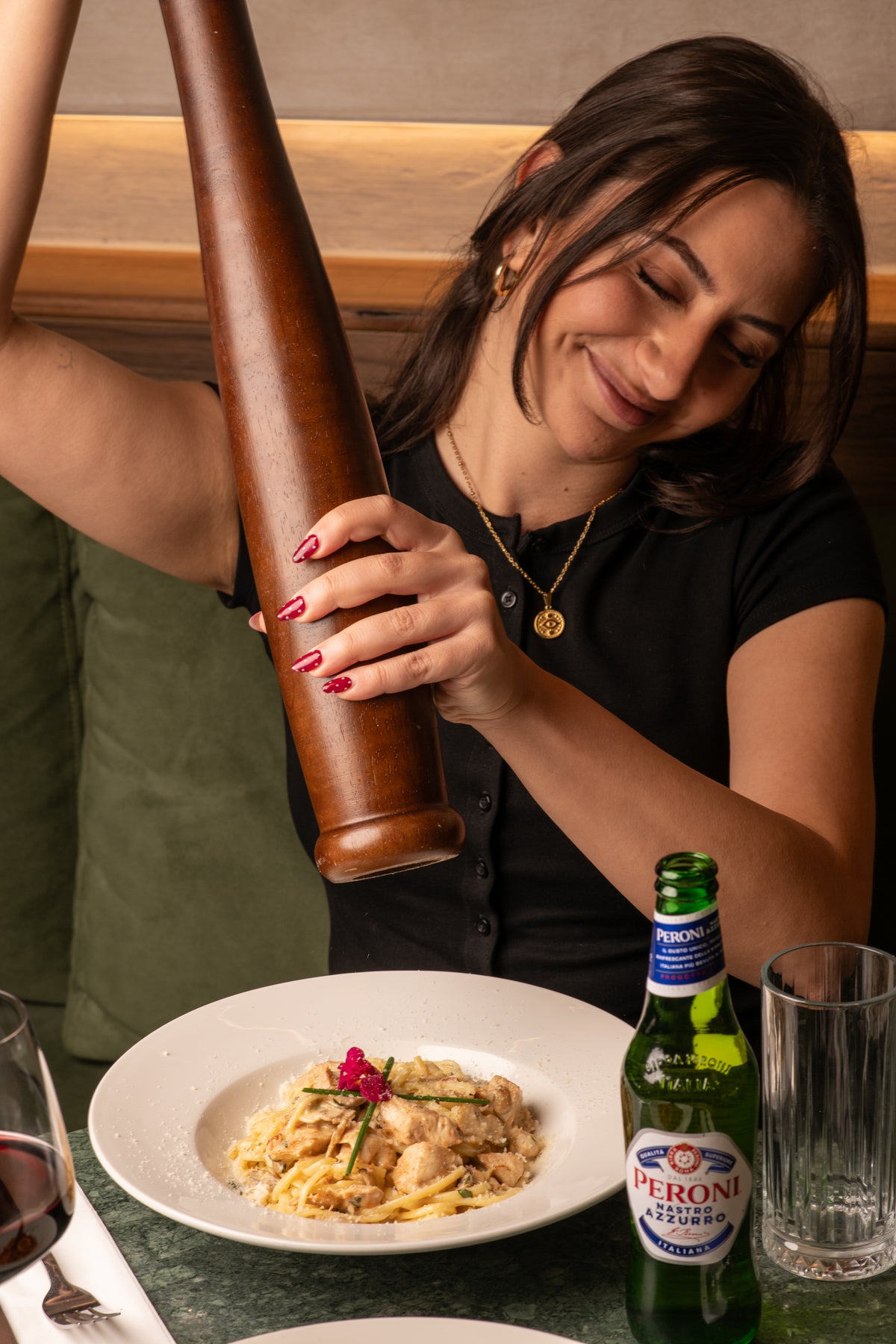
On our drinks menu, the Cara Amica Sangiovese from Italy is described as ruby red with aromas of cherry, red berries and hints of spice. Fancy comparing it with its neighbours? Try the Montepulciano d'Abruzzo, a medium-bodied red with plum and red berry aromas and soft tannins, or the Barolo and the Fidora Amarone for something bigger. See our guide to our wine list and our posts on Montepulciano d'Abruzzo, Nero d'Avola, Barolo and Pinot Nero. Ask our team about glasses and bottles when you order.
Its high acidity makes Sangiovese a very food-friendly wine. One of the classic Italian pairings is a Sangiovese-based red with tomato pasta sauces and pizza, and herbs such as basil and sage bring out its herbal side. From our main menu:
See our posts on spaghetti bolognese, lasagna, pizza Margherita and saltimbocca.
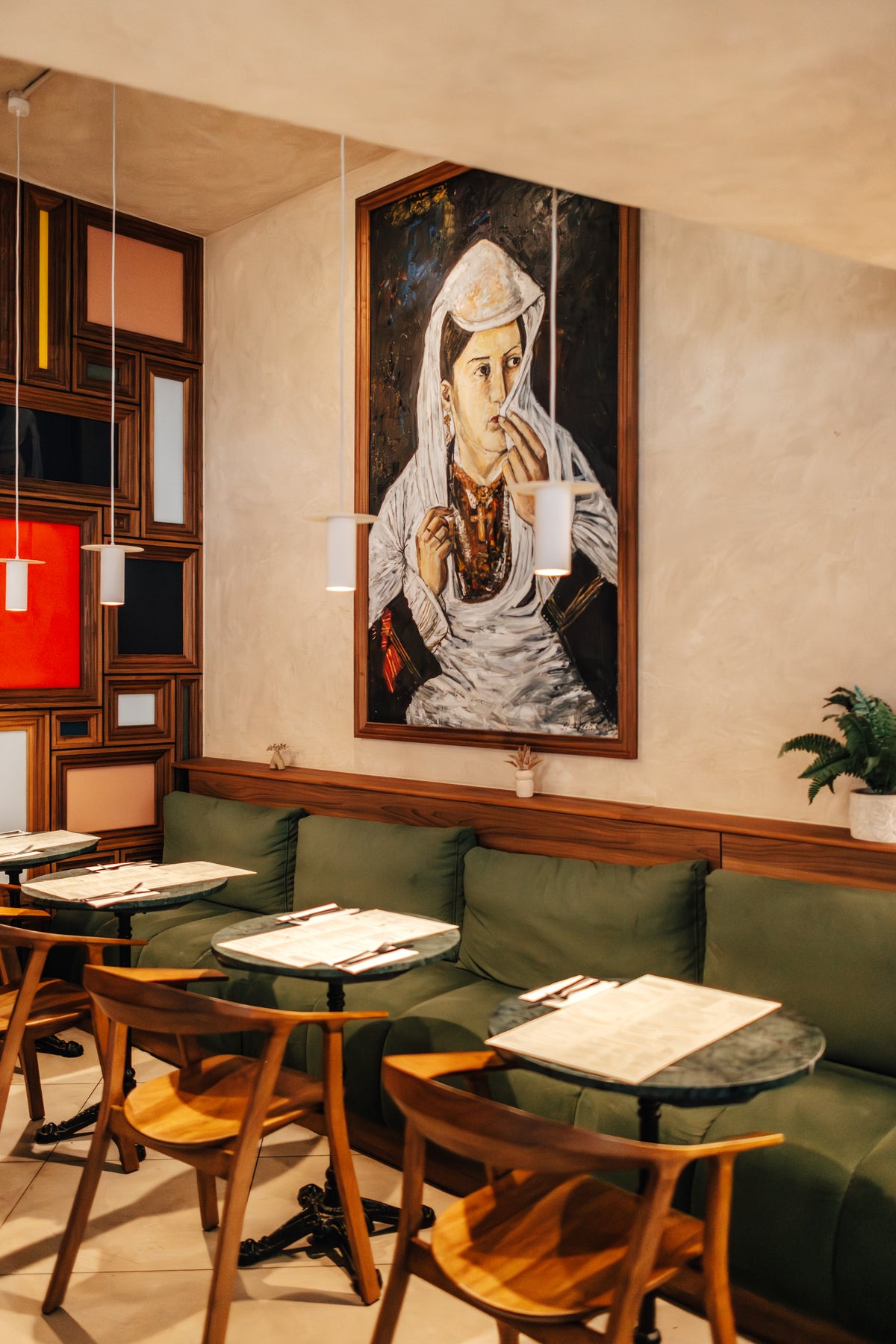
Guests often mention the wine alongside the food. Normof wrote about the pizzas and added: Wine was good, too.
(Normof, Google review) R C enjoyed Great, authentic food (we had pasta, risotto, and a walnut dessert).
(R C, Google review) And John, back from Naples, found the food wasn’t far off from the real deal.
(John, Google review)
“great service, very good food. i really recommend this place”
Maia, Google reviews, 2026
A glass of Tuscany's red grape and a plate of pasta, a few minutes from King's Cross. Book a table or just walk in. Please drink responsibly.
Red Lion Square is a small, leafy square just off Holborn, best known today as the home of Conway Hall. If you're there for a talk, a concert or a meeting an...
Read the storyDinner's done, the tiramisu is on its way, and someone asks for a brandy. If you've ever wondered what the letters on a Cognac bottle mean, or why Cognac is ...
Read the storyMost people know Chilean wine for Cabernet Sauvignon, Merlot or Carmenère. But for centuries, the grape that filled Chile's vineyards was a humbler one calle...
Read the story
